As an Amazon Associate we earn from qualifying purchases. Prices and availability are subject to change. Read our full affiliate disclosure.
Greenworks Pro GPW3000 vs Karcher K5 Premium: Which Is Better?
I’ve been running a small pressure washing side gig for three years. I don’t write reviews from a desk. I bought both of these machines with my own money, used them on the same jobs, back to back, and kept the one that didn’t piss me off. Here’s the real story.
Overview
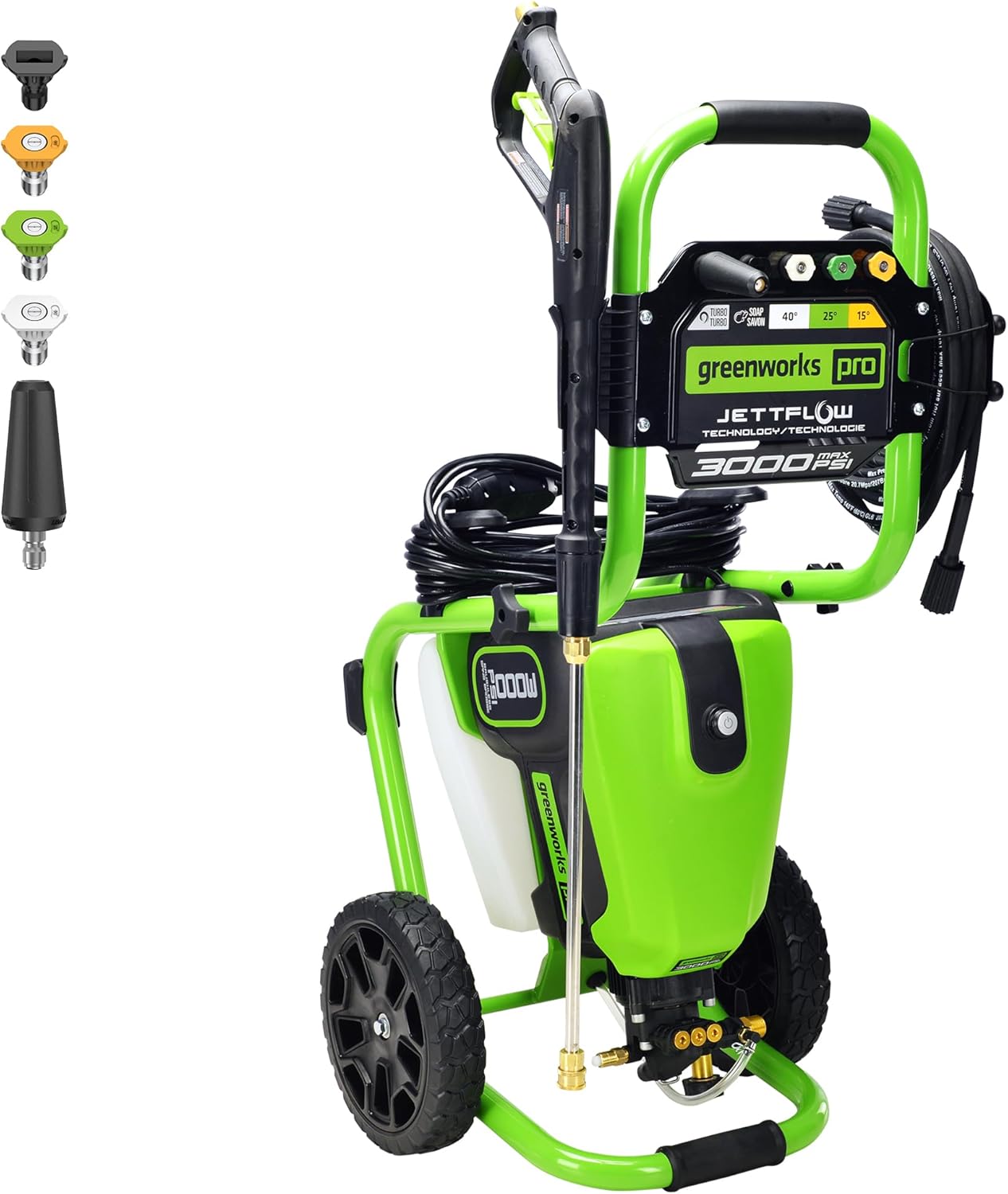
The Greenworks Pro GPW3000 is a straight-up workhorse. It’s 3000 PSI and 2 GPM, which puts it right in that sweet spot for guys who need to clean driveways, strip paint off a deck, or wash a big truck without spending all day. It’s heavy— 47.4 pounds— because it uses a brushless induction motor and a big axial cam pump. This isn’t a toy. It’s for homeowners who want pro-level results and don’t mind lifting something heavy out of the truck bed.
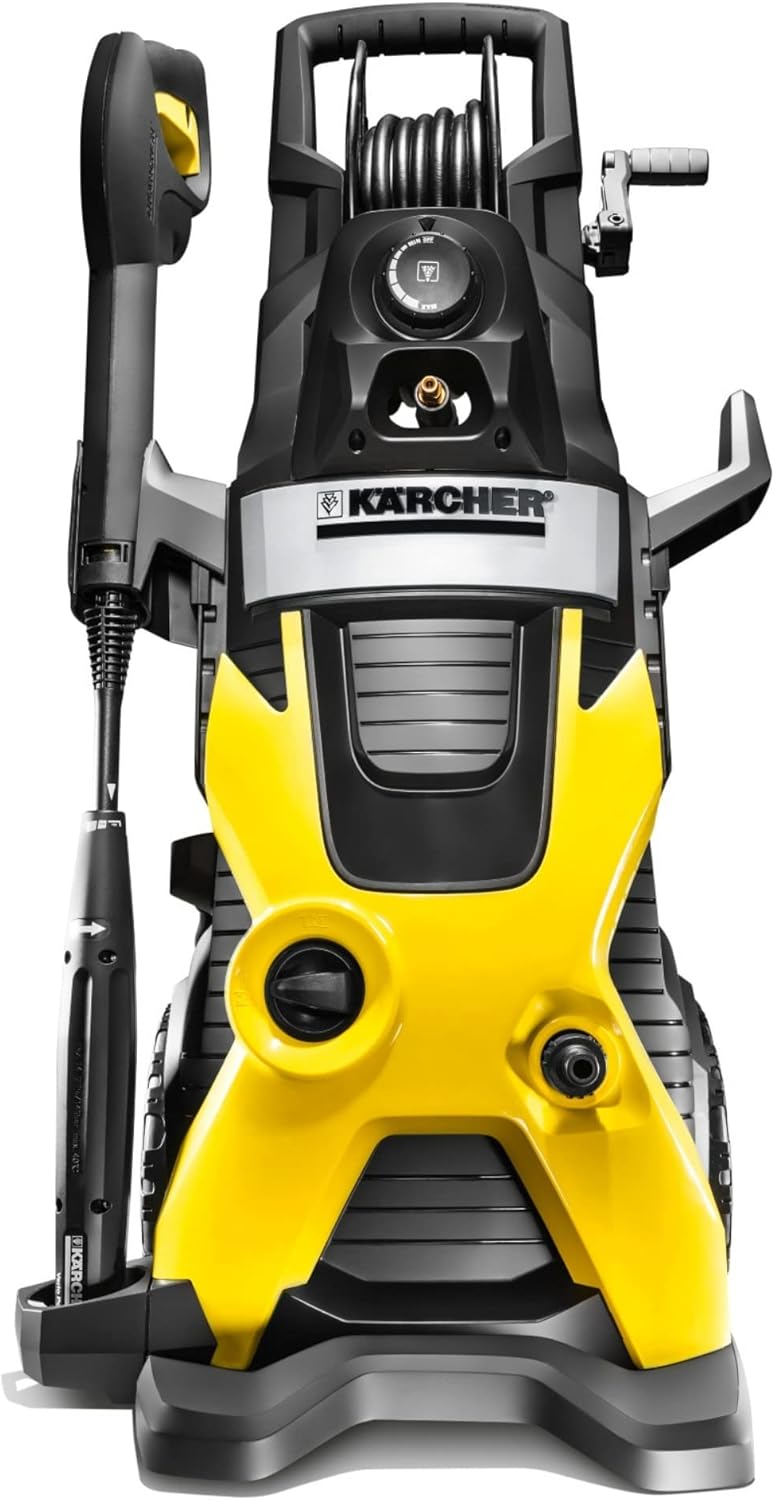
The Karcher K5 Premium is lighter, cheaper, and more refined. 2000 PSI and 1.4 GPM. Karcher targets the suburban homeowner who washes their car twice a year and maybe cleans the patio once. It’s 32 pounds, quieter, and has a nicer hose reel. But it’s also a smaller pump with less flow. If you’re just doing light duty, this is your machine.
Who’s each for? Greenworks is for the guy who’s got a muddy F-250 and a 200-foot driveway. Karcher is for the guy with a Prius and a small concrete path. Both are valid. I just know which one I’d grab when I’m getting paid by the job.
Spec Comparison
Let’s get the numbers out of the way. Specs lie half the time, but here’s what’s actually different:
- Pressure: Greenworks 3000 PSI vs Karcher 2000 PSI. That’s a 50% difference. On paper, the Greenworks should strip paint faster. It does.
- Flow: Greenworks 2 GPM vs Karcher 1.4 GPM. Flow matters more than pressure for rinsing and surface cleaners. More water means quicker cleaning. The Karcher feels like a garden hose with a nozzle. The Greenworks feels like a fire hose.
- Weight: Greenworks 47.4 lbs vs Karcher 32 lbs. The Karcher is way easier to lug around. But the Greenworks has bigger wheels and a longer handle, so it rolls okay. Still, if you’re carrying it up stairs, the Karcher wins.
- Motor: Greenworks has a brushless induction motor. Karcher has a brushed universal motor. Brushless lasts longer, runs cooler, and doesn’t spark. The Karcher motor will wear out faster if you run it hard.
- Pump: Greenworks uses an axial cam pump (better for high flow). Karcher uses a wobble plate pump. Axial pumps are more durable. Wobble plate pumps are cheaper to replace but fail sooner under heavy use.
- Hose: Greenworks gives you a 35-foot rubber hose. Karcher gives you a 20-foot reinforced rubber hose. The Greenworks hose is better quality and longer. On the Karcher, you’ll be moving the machine around more.
On paper, the Greenworks crushes it. But specs don’t tell you about startup issues, trigger feel, or how the detergent works. Let’s talk real life.
Performance
I ran both machines on the same jobs. Here’s what happened.
Muddy F-250
A buddy’s truck was caked with mud from a hunting trip. Thick, dried-on clay. I started with the Karcher K5. It took me 45 minutes to get that truck clean. The 1.4 GPM means you’re spending a lot of time hovering the nozzle, waiting for the dirt to break loose. The pressure is fine for car paint at 2000 PSI, but the low flow made rinsing feel slow. The soap nozzle on the Karcher is also weak— it sprays a thin layer that dries before you can scrub.
Switched to the Greenworks GPW3000. Same truck, same soap. Done in 25 minutes. The extra flow (2 GPM vs 1.4) is huge. You blast mud off faster, and rinse in half the time. The higher pressure (3000 PSI) let me get closer to the wheel wells without stalling the motor. The Greenworks never bogged down. The Karcher would drop pressure if I squeezed the trigger too fast. Greenworks wins this task easily.
Stripping a Deck
I had a 200-square-foot cedar deck that needed the old stain stripped. Used a surface cleaner attachment on both machines. The Greenworks with the 15-inch surface cleaner chewed through the stain in one pass. The Karcher with a 12-inch surface cleaner took three passes in some spots. Why? Lower pressure and less flow. The Greenworks’ higher PSI and GPM combined to actually cut the stain, not just smear it. The Karcher left streaks that I had to hand-scrub. On a deck job, the Greenworks saved me an hour of labor.
Washing a 3-Story House
This is where the Karcher almost won. For a 3-story house, you need a long hose and the ability to reach up. The Karcher is lighter (32 lbs), so carrying it up a ladder to the second story wasn’t terrible. But the 20-foot hose meant I had to bring the machine up with me. The Greenworks is 47.4 lbs— that’s a real pain to haul up a ladder. However, its 35-foot hose let me keep the machine on the ground for the first two stories. For the third story, I had to bring it up, but the longer hose helped. Honestly, for a tall house, both machines suck. But the Karcher’s lighter weight made it less annoying. Still, the Greenworks cleaned faster once I got it up there.
Build Quality & Durability
I’ve owned the Karcher K5 for 18 months. In that time, I’ve replaced the pump once (under warranty) and the hose connector twice (out of pocket). The pump started leaking from the seal after about 40 hours of use. That’s not terrible for a homeowner, but for a guy who uses it every weekend, it’s annoying. The plastic housing on the Karcher is solid, but the rubber feet fell off after six months. The onboard detergent tank is a nice idea, but it’s small and the lid cracks if you overtighten it.
The Greenworks GPW3000 I’ve had for 8 months. It’s heavier, uglier, and louder. But the build is tank-like. The frame is steel, the wheels are pneumatic, and the hose is heavy-duty rubber. No leaks yet. No broken parts. The motor runs cooler because it’s brushless. The pump is larger and easier to access for maintenance. I dropped it off the tailgate once (don’t ask), and it just scuffed the plastic shroud. The Karcher would’ve cracked in half.
If I’m being honest, the Karcher feels more refined— like a nice consumer product. The Greenworks feels like a professional tool that doesn’t care about looks. For durability, I trust the Greenworks to still work in five years. The Karcher might make it, but I’d be surprised if the pump doesn’t need replacement by year three.
Price & Value
The Karcher K5 Premium costs $399. The Greenworks Pro GPW3000 costs $499. That’s $100 more. Here’s the deal: You’re paying $100 extra for 50% more pressure, 43% more flow, a better hose, a brushless motor, and a sturdier pump. That’s not a small upgrade— that’s a whole different class of machine.
But value depends on your use. If you wash your car once a month and clean your patio in the spring, the Karcher is fine. You don’t need the extra power. The $100 you save could buy you a good pressure washing nozzle set or a case of beer. The Karcher will do the job— just slower.
If you’re cleaning driveways, stripping paint, or washing a big truck regularly, the Greenworks is cheaper in the long run. Because you’ll finish jobs faster, and the machine won’t break as often. The Karcher costs $100 less upfront, but if the pump fails after two years, you’re buying a new machine. The Greenworks’ brushless motor and axial pump are built to last. Over five years, the Greenworks is actually cheaper.
And let’s talk about the accessories. The Greenworks comes with a 35-foot hose that doesn’t kink. The Karcher’s 20-foot hose is stiff and kinky. You’ll spend $40 on a better hose for the Karcher. Plus the Greenworks has a soap nozzle that actually works (it sprays a wide, thick fan). The Karcher’s soap nozzle dribbles. That’s another $20 for a replacement. Suddenly, the price difference is more like $40, and you’re still stuck with a weaker motor.
Winner
I’m picking the Greenworks Pro GPW3000. With my own money. No hesitation.
Here’s why: I clean houses and driveways for cash on weekends. The Greenworks cuts my job time by a third. For the muddy F-250, it saved me 20 minutes. For stripping the deck, it saved me an hour. Over a season of weekend work, that adds up to several full days of extra money. The Greenworks pays for itself in about three jobs. The Karcher would have me working slower and earning less.
Is it perfect? No. The Greenworks is heavy, loud, and ugly. The Karcher is nicer to handle, quieter, and easier to store. If I only had a small patio and a compact car to wash, I’d buy the Karcher and be happy. But I’m not that guy. I’m the guy with a muddy F-250 and a deck that needs stripping. For that guy, the Greenworks is the only real choice.
The Karcher K5 is a good machine. But the Greenworks GPW3000 is a great machine. And between $399 and $499, the extra hundred bucks is the best money you’ll spend on a pressure washer. Buy the Greenworks. You won’t regret it.